Learn about health insurance types, costs, coverage, and claims and complete 2026 U.S. guide to choosing the right health plan for your needs.
Health Insurance in 2026 — Everything You Need to Know Before Choosing a Plan
Health insurance is one of the most important financial protections in the United States. With medical bills rising every year, a single hospital visit can cost thousands of dollars without coverage. Choosing the right health insurance policies, understanding plan types, and comparing your options can help you avoid unexpected medical debt and access the care you need.
This 2026 guide from PolicyMartUSA.com explains health insurance types, health insurance coverages, health insurance rates, and how health insurance works — all in a clear, human-friendly way.
Disclaimer: Prices vary by state, provider, age, and income level.
What Is Health Insurance?
Health insurance is a policy that helps pay for medical expenses such as doctor visits, hospital care, medications, preventive screenings, and emergency treatment. In the U.S., health insurance can come from:
- Employers
- The Affordable Care Act
- Private insurance companies
- Medicare
- Medicaid
- Veterans Affairs (VA)
- TRICARE for military families
- Parent or spouse coverage (limited age rules apply)
Health insurance reduces your out-of-pocket costs by giving you access to:
- Lower negotiated rates
- Cost-sharing (deductible, copay, coinsurance)
- Coverage for essential health services
Health Insurance Types :
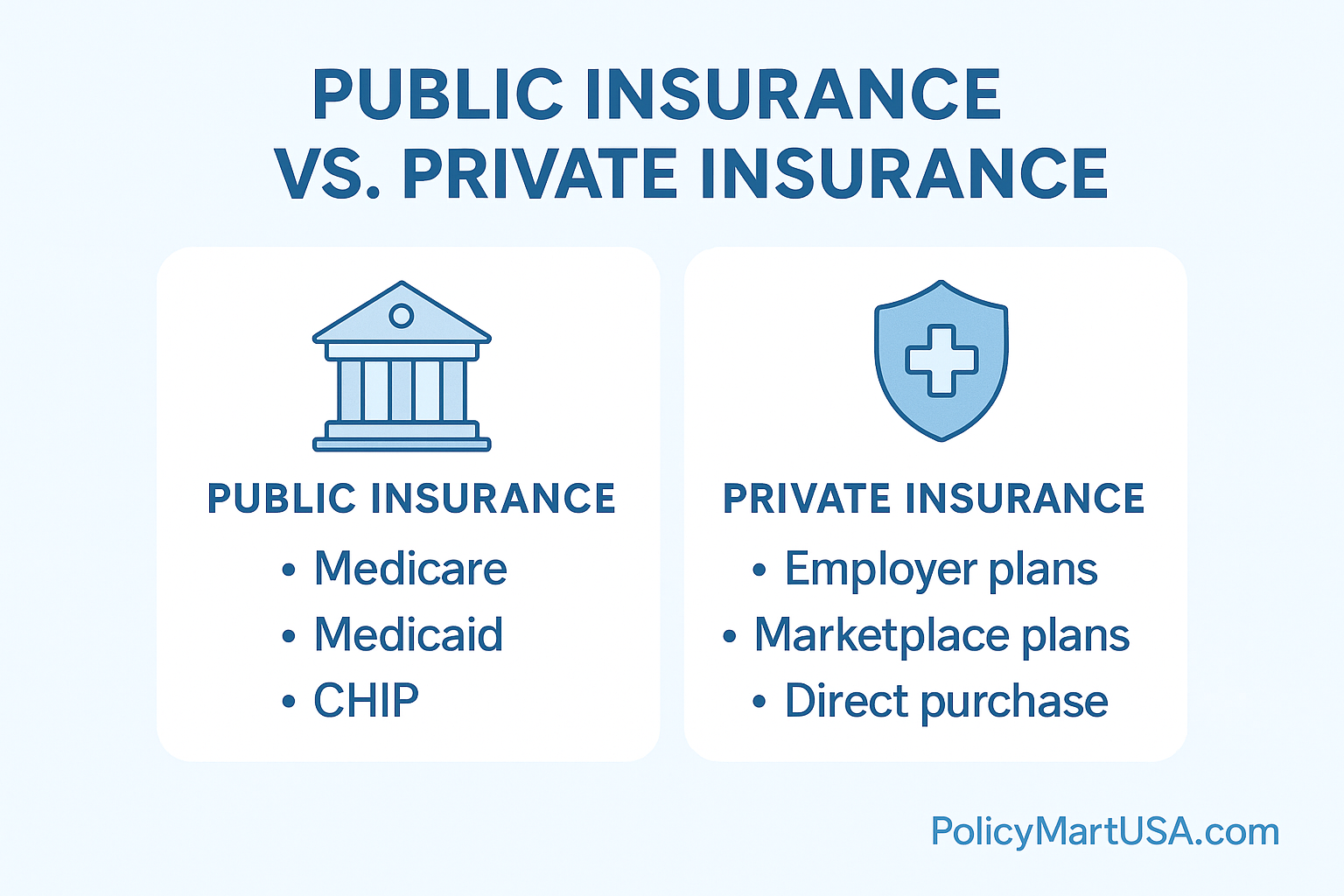
1. Employer-Sponsored Health Insurance (Most Popular)
About 165 million Americans under age 65 get coverage through their employers. These plans often include:
- Lower premiums due to employer contribution
- Wide provider networks
- Preventive care fully covered
Common employer policies include PPO, HMO, POS, and HDHP options.
2. Individual & Family Marketplace Plans (ACA Plans)
Plans purchased on Healthcare.gov fall into 4 tiers:
- Bronze – lowest premiums, highest deductibles
- Silver – balanced cost-sharing
- Gold – higher premiums, lower deductibles
- Platinum – highest premiums, lowest out-of-pocket costs
Many families qualify for premium subsidies to reduce monthly costs.
3. Medicare (For Seniors 65+ and Disabled Individuals)
Medicare includes:
- Part A – Hospital coverage
- Part B – Medical services
- Part C (Medicare Advantage) – all-in-one managed care
- Part D – Prescription coverage
- Medigap – Supplement plans
4. Medicaid & CHIP (Low-Income Coverage)
Medicaid covers:
- Adults with low income
- Pregnant women
- Seniors
- People with disabilities
CHIP (Children’s Health Insurance Program) helps children whose families earn too much for Medicaid but cannot afford private insurance.
5. Private Health Insurance Plans
These are purchased directly from insurance companies like:
- UnitedHealthcare
- Aetna
- Cigna
- Blue Cross Blue Shield
- Kaiser Permanente
Often chosen by freelancers, self-employed workers, and early retirees.
Health Insurance Plan Types Explained (HMO, PPO, POS, HDHP)
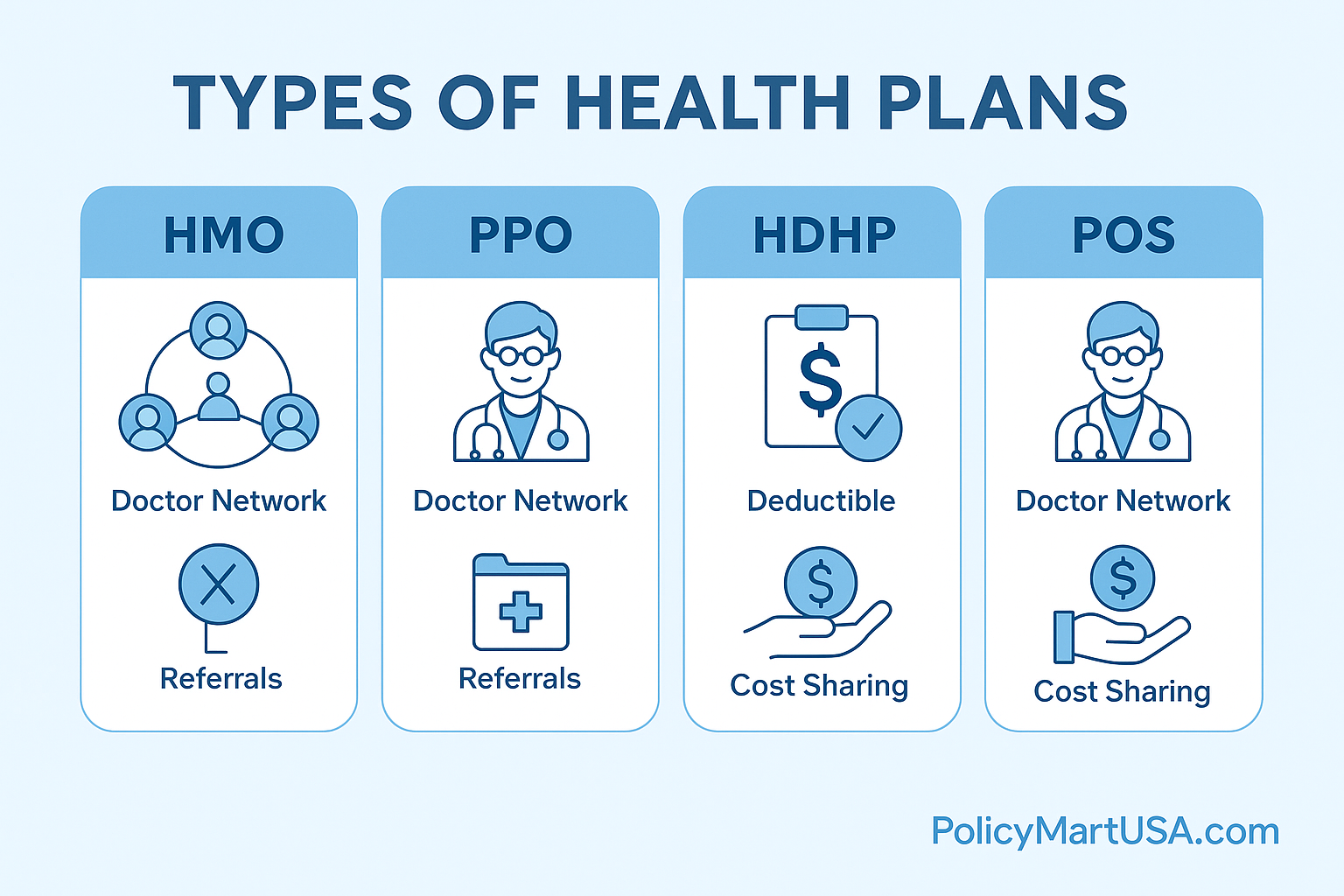
Choosing the right plan type impacts flexibility, cost, and access to specialists.
| Plan Type | Key Features | Best For |
|---|---|---|
| HMO | Requires PCP, referrals needed, lowest premiums | Budget-conscious families |
| PPO | No referrals, nationwide access, higher premiums | Frequent travelers, specialists |
| POS | Mix of HMO + PPO | Mid-budget households |
| HDHP | High deductible, low premiums, HSA eligible | Healthy individuals, tax savings |
How Much Are Health Insurance Rates in 2026?
Health insurance rates vary by:
- Age
- State
- Income
- Provider
- Plan tier
- Tobacco use
- Household size
Average health insurance rates (national averages):
- Individual plan: $450–$750/month
- Family plan: $1,150–$1,900/month
- Medicare Part B: $174/month (base)
- Medicaid: Often free or very low cost
What Do Health Insurance Coverages Include?
Most ACA-compliant health insurance policies include 10 essential health benefits, such as:
- Preventive screenings
- Hospitalization
- Mental health services
- Emergency services
- Prescription drugs
- Pregnancy care
- Pediatric care
Additional coverages may include:
- Telehealth
- Dental and vision (add-ons)
- Chronic condition management
This ensures that your insurance policies provide broad protection.
Health Insurance Claims — How It Works
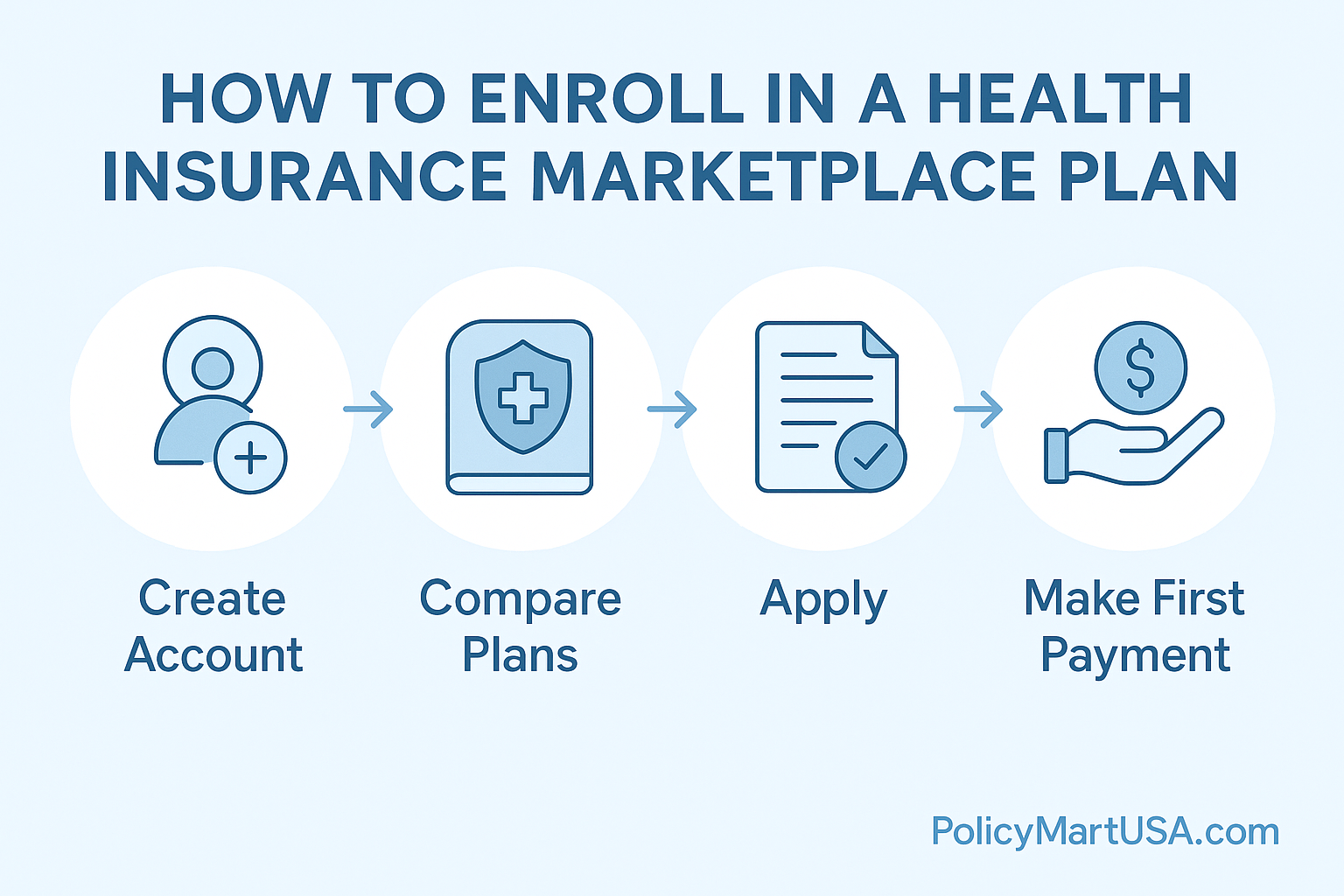
A health insurance claim is a request for your insurer to pay for covered medical services.
How to file a health insurance claim:
- Review your bill or Explanation of Benefits (EOB).
- Collect receipts and documentation.
- Submit the claim through your insurer’s portal or form.
- Respond to any information requests.
- Receive reimbursement or bill adjustments.
Just Tip:
Using in-network doctors reduces your claim denials and out-of-pocket costs.
Comparison Table — Health Plan Types & Cost Differences
| Feature | HMO | PPO | HDHP | Medicare |
|---|---|---|---|---|
| Specialist Access | Referral needed | No referral | Referral depends | Depends |
| Premiums | Low | High | Low | Moderate |
| Deductible | Low–Medium | Medium–High | Very High | Varies |
| Best For | Low budget | Flexibility | Healthy individuals | Seniors |
Is Health Insurance Worth It?
Yes — insurance is essential for financial protection. Without coverage:
- A broken leg can cost $7,000–$10,000
- A 3-day hospital stay can exceed $30,000
- Emergency surgery may cost over $50,000
FAQs :
1. Why is some health insurance so cheap?
Cheap plans often have high deductibles, limited networks, or reduced benefits.
2. Which Company is the Best insurance provider?
Most major providers like UnitedHealthcare, Cigna, Kaiser, and Blue Cross are regulated and legitimate. Ratings vary by state.
3. How do I contact my health insurance company?
Check your ID card for customer service numbers or log into your online member portal.
4. How do I cancel a health insurance policy?
You can cancel through your insurer’s website.
5. When can I enroll in health insurance?
- Open Enrollment: Usually November–January
- Special Enrollment: After qualifying life events (marriage, job change, moving, birth, etc.)
Final Thoughts — Choosing the Best Health Plan in 2026
Health insurance is more than a monthly bill — it’s a financial safety net that protects you from overwhelming medical expenses. Whether you’re comparing employer plans, ACA marketplace policies, Medicare, or private coverage, the right plan ensures you get quality care without financial stress.
Explore your options, compare costs, and choose a plan that fits both your health needs and your budget.