
Discover homeowners insurance types, coverages, average rates, and how to compare top companies in 2026. Protect your home with the right policy.
Key Takeaways
- Homeowners insurance protects your house, belongings, and liability if someone is injured on your property.
- Different homeowners insurance types (HO-3, HO-5, condo, renters) offer different levels of protection.
- Homeowners insurance rates depend on location, rebuild cost, claims history, and coverage limits.
- Bundling home and auto and improving home safety can reduce premiums.
- Comparing several homeowners insurance policies side-by-side is the best way to find strong coverage at a fair price.
Homeowners Insurance Guide 2026 — Protecting Your Biggest Investment
For most people in the U.S., a home is the single largest purchase they’ll ever make. One major storm, fire, or lawsuit could create tens or even hundreds of thousands of dollars in damage. That’s where homeowners insurance comes in.
A good policy doesn’t just satisfy your mortgage lender; it protects your house, your belongings, and your financial future. In this guide from PolicyMartUSA.com, we’ll walk through:
- Homeowners insurance types
- What standard homeowners insurance coverages include
- How homeowners insurance rates are calculated
- How to compare companies and file homeowners insurance claims
Disclaimer: Prices vary by state, provider, and age, as well as by home value, claims history, and many other factors.
What Is Homeowners Insurance?
Homeowners insurance is a personal insurance policy that helps pay for repairs, rebuilding, or legal costs if something happens to your home or you’re held liable for injuries on your property.
Most policies combine several protections into one package:
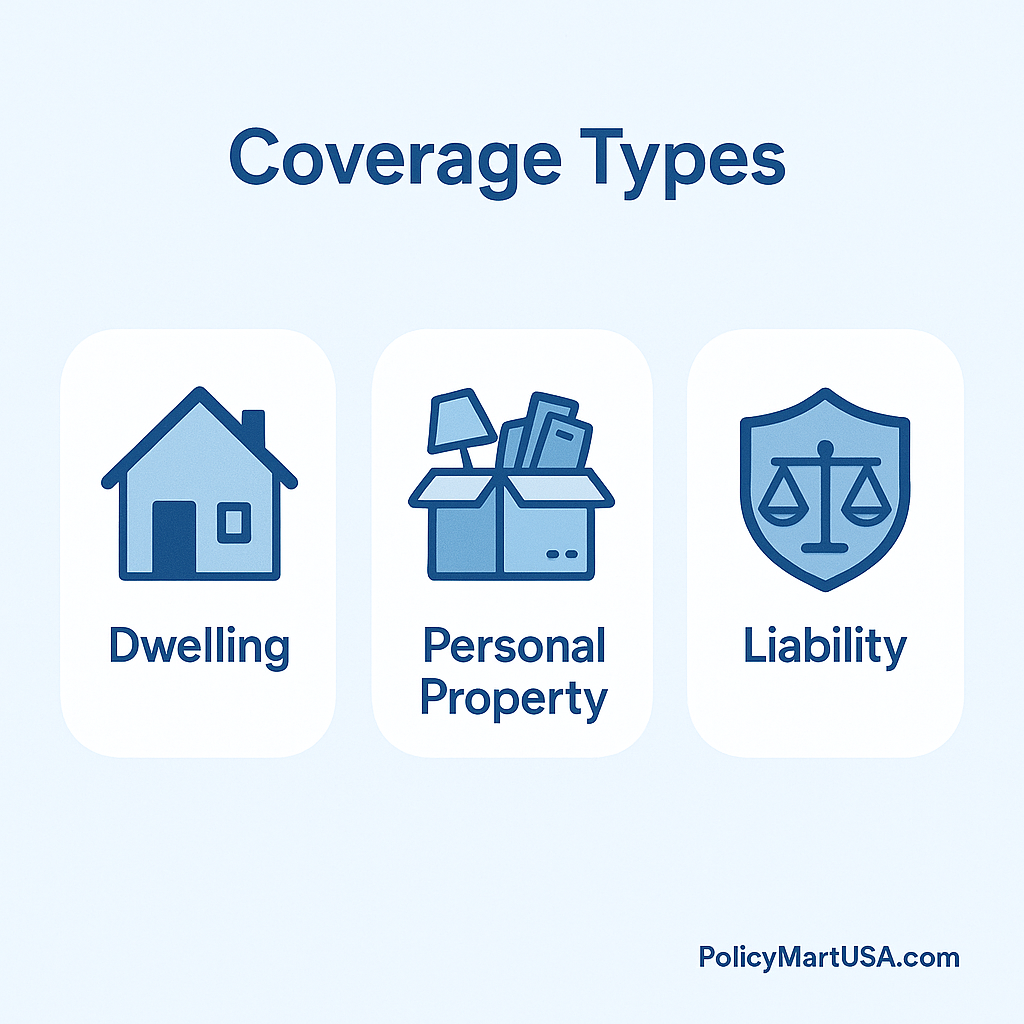
- Dwelling coverage – repairs or rebuilds the physical structure
- Other structures – fences, sheds, detached garages
- Personal property – furniture, electronics, clothing, appliances
- Loss of use – extra expenses if you must live elsewhere during repairs
- Personal liability – legal defense and settlements if you’re sued
- Medical payments – small medical bills if a guest is hurt
Unlike auto or health coverage, homeowners insurance isn’t usually required by law—but lenders almost always require it as a condition of the mortgage.
Types of Homeowners Insurance Policies
Not all homeowners insurance policies are identical. The industry uses standardized forms like HO-1 through HO-8. For most modern owner-occupied homes, the key types are:
HO-3 — The Most Common Policy
- Covers your home for “open perils” (anything not specifically excluded)
- Covers personal property for named perils like fire, theft, vandalism
- Good balance of price and protection for many families
HO-5 — Expanded, Premium Coverage
- Broader protection for both home and contents
- Higher limits and fewer exclusions
- Often recommended for newer homes or higher-value properties
Condo and Renters Policies (HO-6 & HO-4)
- HO-6 (Condo) covers interior walls, built-ins, and personal property
- HO-4 (Renters) covers your belongings and liability, but not the building
- Both are technically homeowners insurance types under the same family of forms
What Does Homeowners Insurance Cover?
Most standard homeowners insurance coverages apply when damage is caused by covered perils such as:
- Fire and smoke
- Windstorms and hail (with some coastal exceptions)
- Theft and vandalism
- Weight of ice or snow
- Sudden water damage from plumbing leaks
- Explosion, riots, aircraft or vehicle impact, and more
What It Usually Doesn’t Cover
Common exclusions include:
- Flood (separate flood policy required)
- Earthquake in many states (may be added as an endorsement)
- Routine wear and tear, maintenance issues, pests
- Intentional damage
If you’re in a high-risk area for flood, wildfire, or earthquake, it’s worth asking:
“What does homeowners insurance cover in my ZIP code, and what requires an extra policy?”
Homeowners Insurance Comparison Table
Use this simple table when evaluating different homeowner insurance policies:
| Feature/Benefit | Basic Policy (HO-3) | Expanded Policy (HO-5) |
|---|---|---|
| Dwelling coverage | Replacement or ACV | Replacement cost |
| Personal property | Named perils only | Broader, often open perils |
| Liability limit options | Standard | Higher available |
| Loss of use coverage | Included | Often higher limits |
| Best for | Typical homeowners | Newer or high-value homes |
ACV = Actual Cash Value (depreciated).
How Much Are Homeowners Insurance Rates?
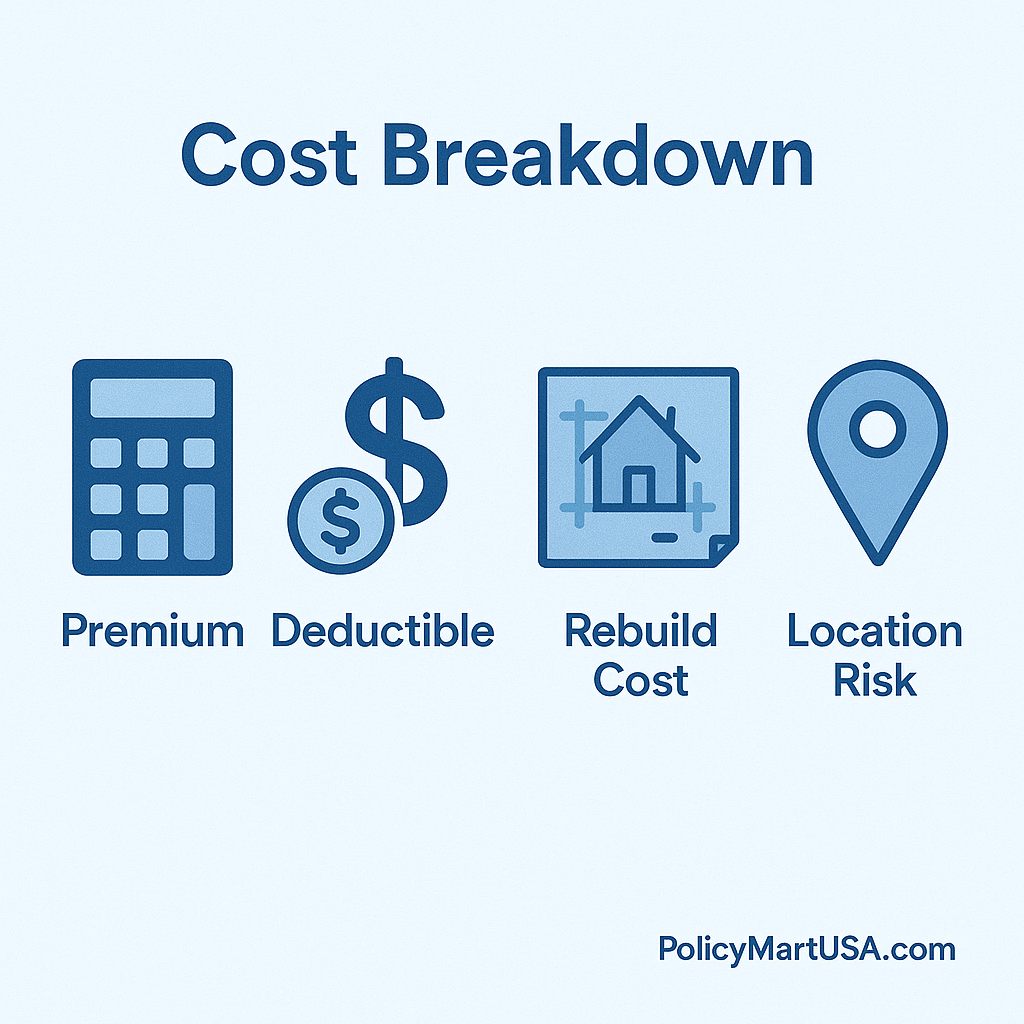
How much is homeowners insurance? It depends on several factors:
Key Pricing Drivers
- Location and local weather risk
- Rebuild cost of the home (materials + labor)
- Roof age and condition
- Claims history (yours and the property’s)
- Credit-based insurance score (where allowed)
- Deductible chosen (higher deductible = lower premium)
- Safety features (alarms, sprinklers, impact-resistant roof)
Many families pay between $1,800 and $3,500 per year for standard coverage, but coastal or catastrophe-prone states may see much higher homeowners insurance rates.
Disclaimer: These are broad estimates only. Prices vary by state, provider, and age of the home.
How Homeowners Insurance Claims Work
Knowing how to file a homeowners insurance claim can make a stressful event more manageable.
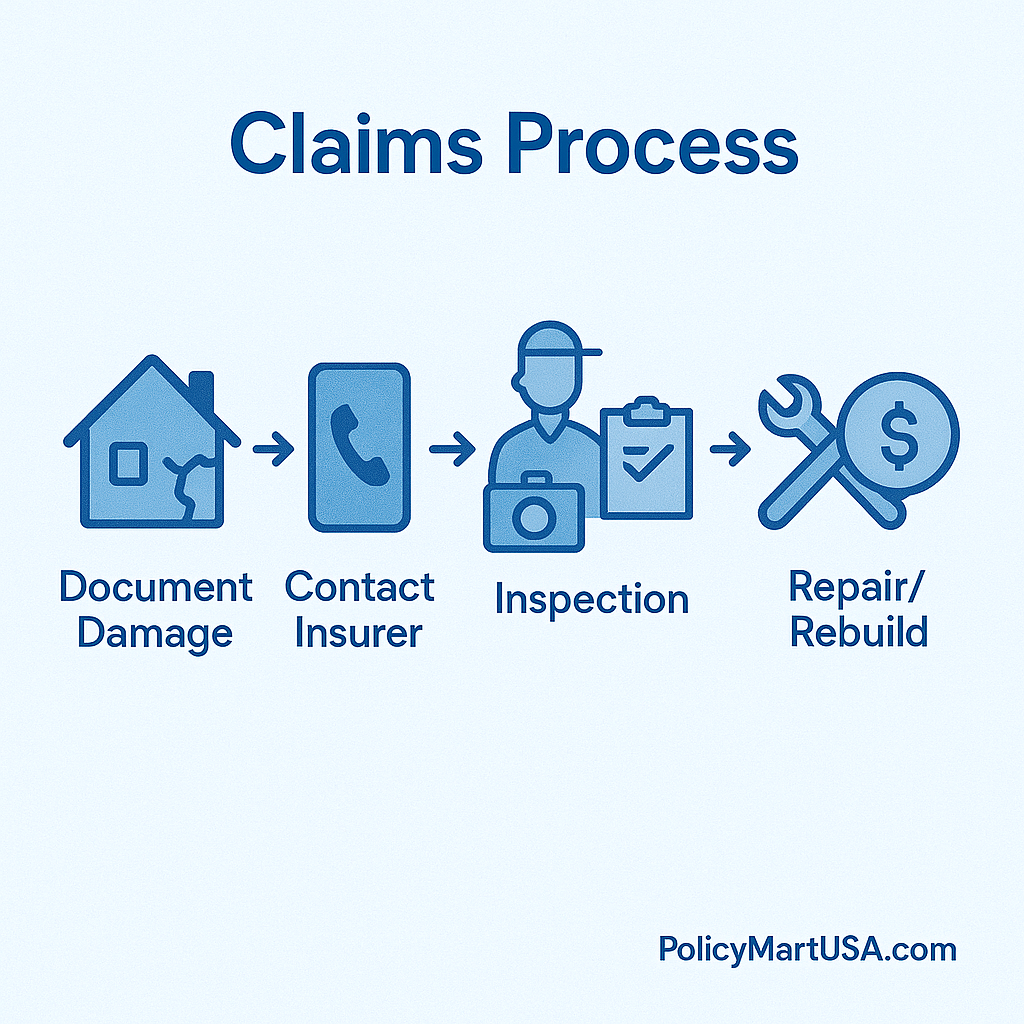
Step-by-Step Claim Process
- Protect people first. Ensure everyone is safe and call emergency services if needed.
- Prevent further damage. Board up windows, shut off water, or take temporary measures.
- Document everything. Photos, videos, receipts, and an inventory of damaged items.
- Contact your insurer. Use the 24/7 phone line or app to start the claim.
- Schedule inspection. An adjuster may visit the property or review photos remotely.
- Review the estimate. Check coverage, deductible, and any depreciation applied.
- Receive payment or contractor authorization.
How to Choose the Best Homeowners Insurance Company
You don’t need the “perfect” company—just one that offers strong coverage, fair pricing, and reliable claims service.
1. Match Coverage to Your Home
Ask:
- What would it cost to rebuild my home from the ground up?
- Do I need extended or guaranteed replacement cost?
- Do I have valuable jewelry, art, or electronics that need extra limits?
2. Compare at Least Three Quotes
Different insurers price risk differently. Comparing multiple companies helps you find competitive homeowners insurance rates without sacrificing coverage.
3. Check Financial Strength & Reviews
Look for:
- Strong financial ratings from independent agencies
- Low complaint levels
- Positive claim-experience reviews
4. Use Discounts & Bundling
Common savings opportunities:
- Home + auto bundle
- New roof or updated electrical/plumbing
- Security systems and monitored alarms
- Claims-free history
FAQs :
Q1: Is homeowners insurance worth it if I’ve paid off my mortgage?
Yes. Even without a lender requirement, replacing a home after a fire or major storm can cost hundreds of thousands of dollars. Homeowners insurance protects your savings and future income.
Q2: What does homeowners insurance cover in most policies?
It typically covers the structure of your home, detached structures, personal property, loss of use if you must move out temporarily, and liability if someone is injured and sues you.
Q3: Why are homeowners insurance rates going up?
Rates can rise due to higher rebuilding costs, inflation, more frequent natural disasters, and increased claim activity in your area.
Q4: How do I contact my homeowners’ insurance company after a loss?
Use the claims phone number or mobile app listed on your policy documents or ID card. Many insurers also offer 24/7 online claim reporting.
Q5: How can I lower my homeowners’ insurance premium?
You can raise your deductible, bundle with auto insurance, install safety features, stay claims-free, and regularly compare quotes from different companies.